
Come September ’64, last year’s seniors were nowhere to be found. The standouts, the BMOC’s, the multi-sport four-year varsity lettermen, were gone. So was their cheerleading entourage. Most had beat it out of town three months earlier. Some stayed and even got married. In that year and across the country, they and their 2,145,000 counterparts had received their coveted high school diplomas; 53.5% going to women, 46.5% going to men. Yet in that same year, college enrollment by gender was almost the reverse with over 57% of lecture halls being filled by the males of the species. At the time, it was the order of things; the compartmentalization of society’s participants. Arguably more caste than class, ours was a system steeped in the reworked tradition of the pre- and post World War II era. Steadfast roles, and the varying degrees of privilege accorded therein, were based on race, color, creed, wealth, legacy, and of course, gender. Contrary to popular belief, hard work alone was not going to land any of those recent grads in the Oval Office. In the meantime, none of us underclassmen gave any of this a thought, second or otherwise. We were too busy caking on the Clearasil.
Regardless, society’s complacent attitude towards its own history of discrimination was about to change. Even if it meant one step forward and two steps back, the Civil Rights Act would push a society averse to being pushed. Fortunately, some of us kids actually were following the trail of Dr. King. We even began to understand. Still, most of my sheltered new found upper middle class friends were afraid. Afraid of things like Malcolm’s anger. Having lived in a series of poor mixed-race working class communities, I’d heard and seen it before. After all, some of my best friends were —. And you know, that was true. They were friends.
But let’s get back to those now missing seniors. A majority did not go on to college. What happened to them? Let’s see, that would be about 427,000 males and 681,000 females. For those carrying the “Y” chromosome, it was pretty clear. Depending upon the service options available, they were facing somewhere between three and eight years of military service, 21 months active. In general, if they were in good health, and weren’t married, conscription was just around the corner. Most preferred to just enlist sometime between commencement and reaching the magic age of 18 1/2. For those that were just a little bit younger, they would just wait to be drafted becoming bonafide members of the “B.P.O.I.-Benevolent and Protective Order of Inductees.” It must have been popular? For in 1965, pledges had more than doubled from the year before. (112,386 to 230,991). One could visit exotic southeast Asia where visiting members had grown from 23,300 to 184,300. The Gulf of Tonkin Resolution saw to that.
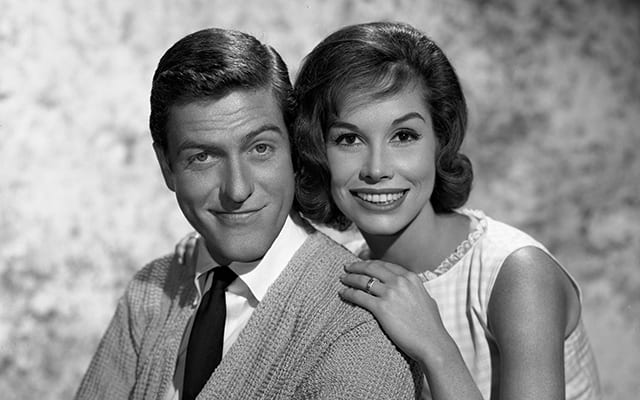
As for the young women of the same period, they were also coming of age. The post WWII American culture, with the help of Hollywood, reinforced the typecasting of the genders. The 1950s images of June Cleaver and Harriet Nelson would be replaced by Mary Tyler Moore’s depiction of Dick Van Dyke’s TV wife, Laura Petrie. She proved that a 17-year-old former USO dancer can land a professional husband and eventually become a stay at home mom. Isn’t that what they were supposed to do? Get married before their 21st birthday, make babies, and be the perfect homemakers? Otherwise, teaching, nursing, waitressing or becoming a member of the secretarial pool seemed to be the alternatives. Maybe, but Betty Friedan saw a different future for the female side of the ledger. Her two years out publication, the “Feminine Mystique” rekindled the non-traditional thoughts emulated by the suffragettes, Rosy the Riveter, and the All-American Girls Professional Baseball League. There was more to life than wearing an apron. Women were stirring the pot. They could be what they wanted to be. The National Organization for Women (NOW), said it would see to it.
Meanwhile, we summer tanned sophomores were mostly, if not completely, oblivious. We were on intellectual overload. Back in June, we had toiled through Orwell, F. Scott Fitzgerald, and William Golding. It was time for a break. After all, we were still insecure, invisible, and on display. Zits will do that. Even when maneuvering between bells, our forced marches were motivated by fear. Fear of sitting in the front row. Fear of being called on. Fear of PE and its aftermath, the dreaded group shower. Fear of talking to girls, etc., etc. Given most of us were in the same boat, we would take periodic refuge with our own cadre. We’d circle the wagons just before first period, lunch, and of course after school. Slowly but surely, our routines would gradually change. We were starting to gain some confidence; peel off in our own directions. Some would join some sort of on-campus club. For others, it was choir, band, or even the school’s orchestra. For the rest of us with an ounce of athletic ability, PE would mercifully be traded for a spot on a team. We were busy finding our place in the world of the preps. Between the seasons, football and basketball, sock hops would fill the Friday night blanks. Courage man courage. Are you going to ask her to dance or not?
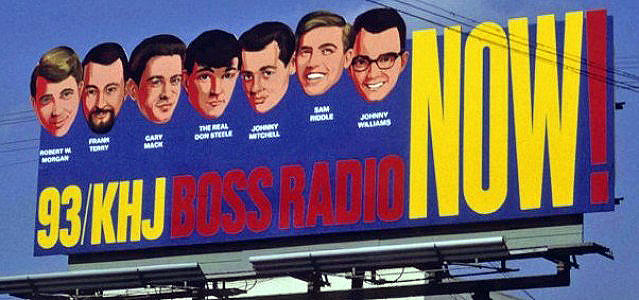
For me and my buds, it was about music. It was shaping us as much as anything. If we weren’t wearing out our $3.49 33 1/3 stereo LPs we were listening through the clicks and pops of our worn out mono 45’s. In LA, the AM dial still ruled. KRLA and KFWB would battle the KHJ Boss Jocks for our listening attention. Depending upon the hour, it was Robert W. Morgan, the Real Don Steele, Charlie Tuna, Sam Riddle, Wink Martindale and all the rest. Whichever channel, 93, 98 or Radio 1110, we were rolling with Mick. Virginal fifteen-year-old boys weren’t getting any “Satisfaction” either. Heck, most of us didn’t even know what that meant. A couple years later, Johnny would remind me that I was from the Poor Side of Town but I knew, I had a Heart Full of Soul. We were Turn, Turn, Turn(in) while California Dreamin. As soon as the five of us finished insulating our lead guitar players parents garbage, we were Jamin. Someday we’ll be just like the Byrds, the Yardbirds, or maybe even “Them.” Alas, my girlfriends name was not Gloria. I was just pleading, Baby Please Don’t Go.
With everything going on, our teenage plates were full. School and homework were in there somewhere. I was one of the few that also had a job; working as a stock boy in a women’s shoe store. For a whole $1.15 and hour, my Saturdays were spent dying fabric shoes for wedding parties. During the week, me and the guys ran on cross country and track teams, workouts took most of our afternoons. (We were running intervals way before it was cool). Between the “Garage” and laps , there wasn’t a whole lot of time for much else. Even boob-tube watching required pre-planning. According to the fine print in the TV guide, most of what was on, wasn’t that great anyway. Gomer, Lucy, and Red Skelton reruns? Really? At least the family didn’t watch Lawrence Welk. Bonanza, The Adams Family, and Combat were more for my taste. Regardless, it wouldn’t be until next year when my parents passed down the old Zenith 17″ black and white when I gained complete control of the dial. Now I was playing the role of the human remote for me. What was it going to be: Records, TV, Records, TV–Oh yeah, homework!
Still, outside our safe and sane suburban neighborhoods serious stuff was still going on. 1965 saw SCLC and SNCC converge on Selma. Once again, Chet and David would tell us all about the assassination of Malcolm, Bloody Sunday, and the Edmund Pettis Bridge. The front page of the Times carried Martin’s return from jail, the march to Montgomery, and how white supremacists beat James Reeb, a white Unitarian Universalist minister, to death. The year also saw the passage of the Voting Rights Act. Initially, it appeared to only add more fuel to the fire. Literally, this came close to home.
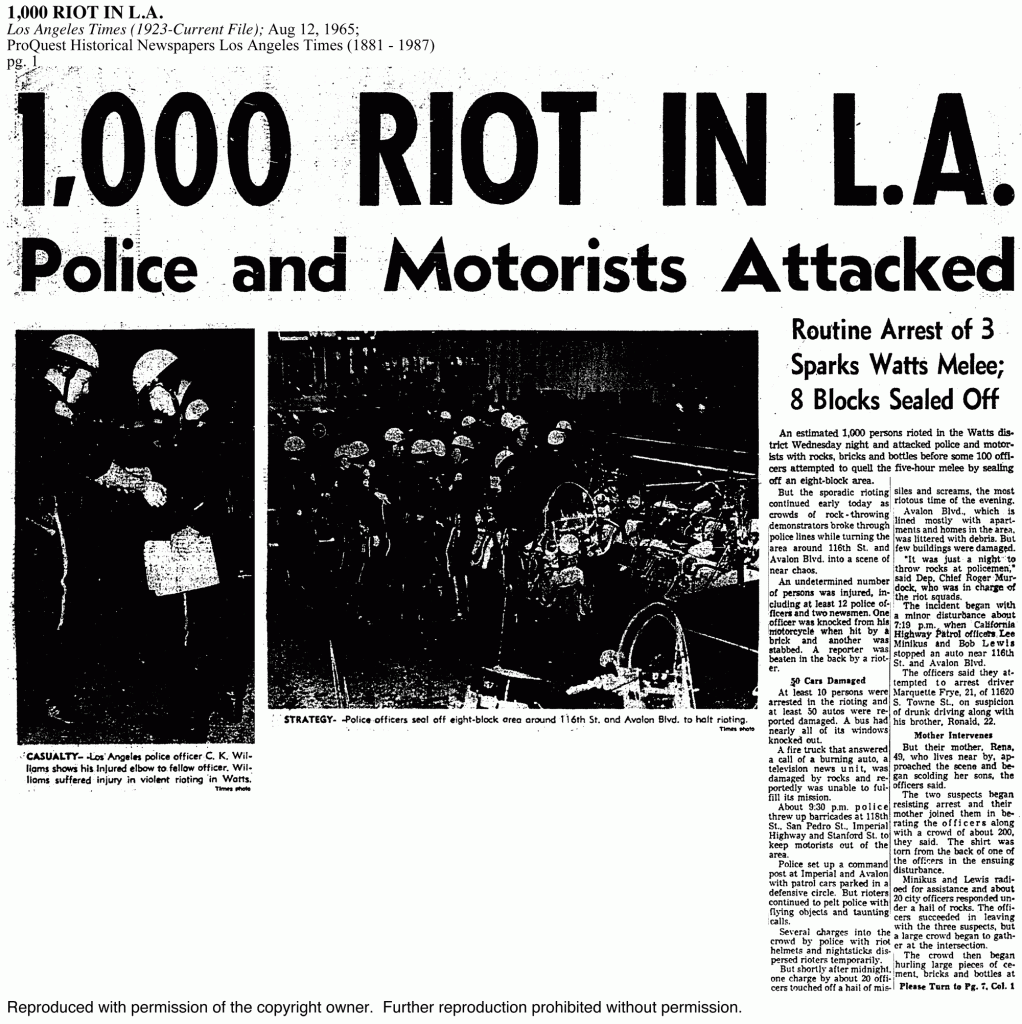
A familiar name, but not so familiar a place. There was rioting in Watts, a neighborhood out of site and out of mind. Why are they busting into stores, stealing, and setting fires? Aren’t these the problems of “Colored” folks somewhere outside of California? For us babes in the woods, Martin’s message was sinking in. We had now had evidence. We could see the smoke just 10 miles away. For the most part, neither our parents or teachers talked about causation. It was just senseless violence perpetrated by thugs living south of Central. End of story!
Even if we had been looking, we weren’t seeing, listening but not hearing, reading but not really learning. After all, current affairs were hardly being discussed in school. They weren’t a part of the 9th or 10th grade curriculum. Regardless, it seems like I heard something about a debate in England between a couple of guys named Buckley and Baldwin.
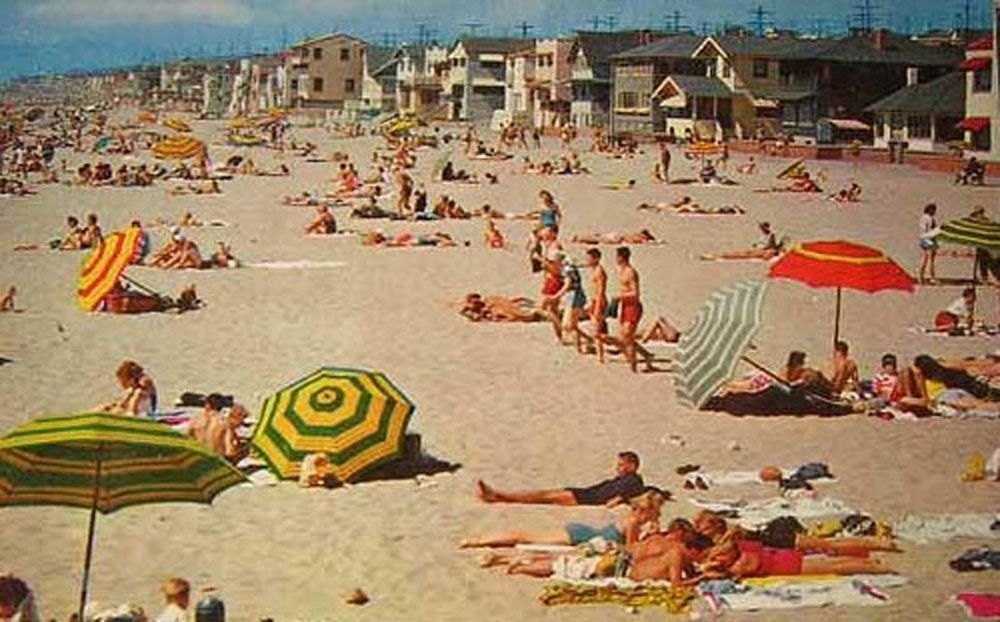
Ironically, the few of us living in the land of garden apartments, had some inkling of a world beyond the row after row of garage doors and fine trimmed lawns. Yet, we were neither mature enough, nor articulate enough, to fully understand. But we knew things weren’t right. There were differences and they weren’t just about color. Yet the majority of my newly acquired classmates, those with college educated professional parents, seemed to be the most unnerved, the most perplexed. They and their homogenized children were bred, maybe born, into the world of ocean breezes and ranch style tract homes. Those other places, the places to avoid like Watts, Willowbrook, Compton, Inglewood and East LA were just words on a map. To one degree or another, we just didn’t know what we didn’t know. Not to worry, short-term anxiety would soon be replaced by simple disinterest. Besides we still had other concerns. We were just 2.5 miles to Mickey’s Deli on 2nd Street and Hermosa Avenue. It was off to reclaim our summer beachhead. There were tans to be had, waves to catch, bikinis to check out. More body than board, we returned to our summer surfing routines.
Yet, out there in the big distant world of the adults, President Johnson’s War on Poverty would continue. He would outline his concepts of a Great Society and sign an Amendment to the Social Security Act. Medicare and Medicaid were here to stay. That grabbed out parent’s attention. For us, a more tangible war was on the horizon. SDS would conduct its first anti-Vietnam War march on Washington while draft cards were being burned in Berkeley. There was a blackout in the Northeast, Hurricane Betsy slamed Louisiana, the Palm Sunday tornadoes hit the Mid-West, while Cubans were being airlifted to Florida. While the Arch was being completed in St. Louis, the Ranger 8 Probe was taking pictures of the ‘Mare Tranquillitatis’ region of the Moon. Cosmonaut Aleksei Leonov took a stroll in space only to be followed by our own astronaut Ed White. In four short years, Gemini would be replaced with the launch of Apollo.
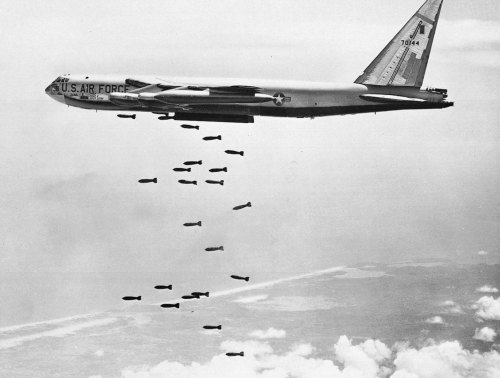
If one was paying attention, he or she would have known that Rhodesia was having its own race issues. Suharto was stirring it up in Indonesia, and there were US forces in the Dominican Republic. What the hell? The Dominican Republic? Canada’s red banner with its own Union Jack found itself replaced by a “Maple Leaf,” Singapore was expelled from Malaysia, while India and Pakistan were at it again. In the background, the Soviets conducted 14 more nuclear tests while the US incursion into Vietnam would bring new meaning to the concept of the “Blitz.” Operation “Rolling Thunder” marked the commencement of 3 1/2 years of the continuous bombing of the north. By the end of 1965, a Barry, not named Goldwater, was telling us we were on the “Eve of Destruction.”
Thankfully, there was still sports. Every Saturday, if we were home, we heard these words:
“Spanning the globe to bring you the constant variety of sport… the thrill of victory… and the agony of defeat… the human drama of athletic competition… This is ABC’s Wide World of Sports!”
Aww yes—Koufax pitched a perfect game, Jimmie Clark won Indy, the Dodgers squeezed by the Twins, the Celtics blew by the Lakers, the AFL’s Bills trounced the Chargers, while the NFL’s Packers chewed up the Browns. UCLA’s hoopsters beat those Wolverines, and although losing to the Longhorns, the Tide remained college grid-irons number one. Go Figure! Oh, I almost forgot. Roy Emerson still dominated men’s tennis and the Astrodome played host to the first indoor professional baseball game.
By December, we would all be ready for a Charlie Brown Christmas.
 The Scholarly Participant
You must be logged in to post a comment.