
For me, this article by Jennifer Breheny Wallace really hits home. In 1960 we moved from Colorado to California. I was eleven. There still would be a couple more trips riding between Denver and LA on the California Zephyr. Although we lived in Colorado Springs and like my big sister before me, I spent many a day on my grandmother’s farm miles away in Fort Morgan. Those rural experiences were now over.
My father had been a Master Technical Sergeant during WWII. With a radio on his back and a carbine in hand, he was a Bronze Star and Purple Heart recipient with the 1st Marine Division at Guadalcanal. By today’s standards he clearly suffered from PTSD. Moving from one poor neighborhood to the next, he just couldn’t hold a job. We never lived anywhere longer than two years. Alcoholism, random acts of violence, chain smoking and malaria slowly got the better of him. Let’s just say paying the rent became a problem. Although mentally deeply wounded, at his core he was a decent man. It was evidenced in moments of sobriety. He certainly was well aware of his short-comings. Yet he never wavered from voting, what he considered his civic responsibility.
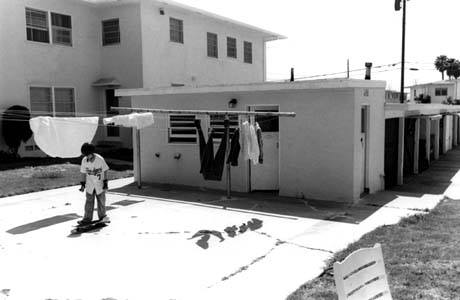
That’s not me but we did live here. Our polling place was down this alley.
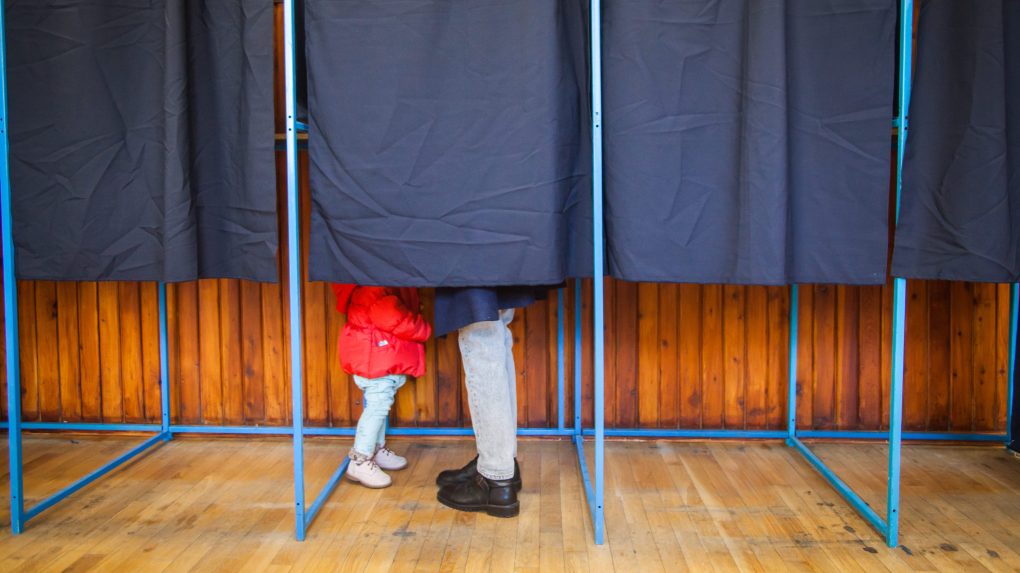
My prelude to the now infamous Kennedy/Nixon election of 1960 was my father walking me to the polling place in our tenement like apartment complex in Venice. It was in a garage off of an alley. I stood next to him, in the booth, watching him vote. He explained to me why I was there, what he was doing and why it was important. At the time, my parents and I shared a one bedroom apartment in a mostly ethnic neighborhood. I was the anomaly, a fifth grade skinny white kid. When we walked back to our apartment, he told me he just voted for the next President of the United States, Richard M. Nixon. Irrespective of the distruption caused by his inner demons, he did know what needed to be done. Sometimes he succeeded. At least he instilled in me the idea of being a responsible citizen. He made the attempt of keeping us all aware of what was happening around us. From the view behind a TV tray, the 6:00 p.m. dinner hour revolved around watching Huntley and Brinkley. (My father thought Cronkite was too liberal). Besides Red Skelton and Lucy, national politics, and whatever NASA was doing, dominated the small screen. My parents formal educations ended with high school diplomas but somewhere along the line, they both understood the importance of voting and their greater civic responsibility of staying informed and staying engaged.
For too many people today voting doesn’t seem to mean much. Civic responsibility gets replaced by cynicism or superficial gratuitous patriotism. An attitude of “What’s in for me?” or the notion of nothing will change anyway seems common. I would guess that many of these individuals did not get a civic education either at home or in school. Rout memorization of dates, places and names to satisfy State testing requirements does little too instill a sense of value in governance. What students mostly get from family, friends and even some teachers, is a world of teaching to the test and commentary about personal political beliefs. What does this have to do with civic responsibility? It just isn’t as important especially in a world where everyone is already an unproven expert in everything. This has to change if we are to regain any sense of civility and our common responsibility to each other. It has to start at a young age. Education has to pertain to more than just the acquisition of vocational skills or meeting the short-term political needs of politicians and education administrators.
Jennifer Breheny Wallace’s article shows that there are those out there that understand the importance of civics. They have an outline that needs to gain universal acceptance. This revisitation, this reprioritization of a true education in civics just may provide the common thread of binding the nation together. Our challenge has always been to balance the rights and needs of the individual with the needs of the many. Our unfettered right to be active civic participants has always been the core foundation of American exceptionalism. Our civic knowledge has to have depth, based in a concerted effort to understand our unique system of a representative democracy, and our place in this “Republic.” It is our collectively responsibility to do so.
Steve Harding
 The Scholarly Participant
You must be logged in to post a comment.